
Wiring You Can Trust
Electrical Rewiring in Franklin, NC for Older Homes and Cabins
Electrical rewiring in Franklin, NC and across Western North Carolina replaces tired wiring in aging farmhouses and cabins and wires new builds and outbuildings. Call Switched Up Electrical Services LLC at (828) 200-0837 for a free quote.
- NC Electrical Contractor License U.37396
- BBB Accredited
- 24/7 Emergency Service

Time to Rewire
Signs a Home Needs Electrical Rewiring in Franklin, NC
Wiring hides inside the walls, so most problems show up at the outlets, switches and lights. Age alone is not the issue. The real question is whether the wire, its insulation and its connections can still carry today's loads safely.
- Two prong outlets with no ground anywhere in the house
- Cloth covered wire, or porcelain knob and tube in the attic or basement
- Switch plates or outlet covers that feel warm to the touch
- Scorch marks, a burning smell or melted plastic at a device
- Lights that flicker when appliances cycle on and off
- Chewed wire in the attic, crawlspace or walls
If you see more than one of these, have the wiring checked before you add new loads or finish a basement. Electrical rewiring in Franklin, NC can be planned in stages, so a problem found early rarely means tearing out every wall at once.
How Our Rewiring Process Works
Rewiring a lived in home takes planning, because the power has to stay on in some rooms while others are worked on. In North Carolina, rewiring generally requires an electrical permit, with inspections through the county inspections office before the walls are closed and again at the end.
-
Inspection and Plan
We trace the existing circuits, test what can stay and map what has to go. You get a clear plan and a free quote, with the work broken into phases where that helps.
-
Permit and Scheduling
The permit is arranged before work begins. We schedule the job room by room so the kitchen, a bathroom and a bedroom keep power as long as possible.
-
Running New Circuits
New cable is fished through walls, attics and crawlspaces with openings kept as small as the house allows. Each circuit ends at a new device and a properly sized breaker.
-
Inspection and Walkthrough
After the rough in and final inspections, we label the panel, test every outlet and walk you through what changed. Old wire that was abandoned is noted so nobody mistakes it for live wiring later.
Whole House Rewiring for Older Homes
Whole house rewiring replaces every branch circuit in the home, usually along with the outlets, switches and grounding. It is the right call when the original wiring is near the end of its life everywhere, rather than in one room.
Many older homes and cabins in the mountains were wired long before today's kitchens, home offices and heat pumps. Their circuits were never meant to carry that much load, and decades of additions often left a patchwork of different wire types joined in hidden boxes. A complete rewire replaces that patchwork with one consistent, grounded system you can trust.
House rewiring is disruptive, but it is rarely as messy as people expect. Most of the work happens from the attic, the crawlspace and small openings in the walls. The result is a home that can take on new appliances and future projects without the risk hiding behind the drywall.
Replacing Knob and Tube, Cloth and Aluminum Wiring
Some wiring types call for replacement even when they seem to work. Knob and tube wiring has no ground, and its insulation turns brittle with age. It was also designed to shed heat into open air, so attic insulation packed around it can let it run hot.
Cloth covered cable from the middle of the last century has similar problems with crumbling insulation, especially where it was bent at a box or exposed to heat. Aluminum branch wiring, used in some homes built in the 1960s and 1970s, can loosen and overheat at its connections, so those connections need special attention or the circuits need replacing.
Many insurers and home inspectors ask about these wiring types when a house is sold. Replacing them removes a common sticking point in a sale and lets the house carry modern, grounded outlets in every room.
New Electrical Wiring for New Builds and Outbuildings
New electrical wiring is the other half of this work. New homes, additions, detached garages, barns, workshops and tiny houses all need circuits planned from the ground up, with the outlets, lighting and dedicated circuits placed where you will actually use them.
Electrical wiring installation on a new build starts with a walkthrough of the plans. We talk through furniture placement, kitchen appliances, outdoor outlets and any future needs, such as a shop or a car charger, so the rough in leaves room to grow. On rural lots, power often has to travel underground from the house or the meter to the outbuilding, which means trenching and conduit sized for the distance.
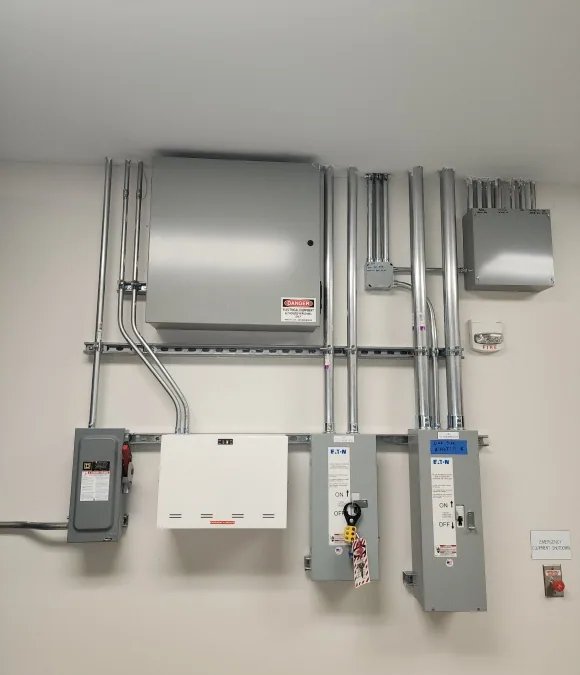
Commercial spaces get the same care, with conduit runs, disconnects and circuits laid out for the equipment the business depends on. Good planning at this stage costs far less than opening finished walls later.
What Affects the Cost of Rewiring a Home
Rewiring prices vary more than most electrical work, because every house is built differently. Your free quote comes after we have seen how easily the attic, crawlspace and walls can be reached.
- The size of the home and the number of circuits
- Attic and crawlspace access, or the lack of it
- Plaster, paneling or finished walls that slow the work
- Whether the panel needs replacing at the same time
- The number of outlets, switches and fixtures to replace
- Permit fees and the required inspections
The quote breaks out each part of the job, so you can see what full or partial electrical rewiring in Franklin, NC involves before any wall is opened. Ask for yours and get straight answers.
Local Contractor
Why Homeowners Choose Switched Up Electrical Services LLC to Rewire
Switched Up Electrical is a locally owned contractor based in Franklin, licensed by the North Carolina State Board of Examiners of Electrical Contractors under license U.37396. We are insured and BBB accredited, and every quote is free with no obligation.
Rewiring happens inside your home, often while you are living in it. We focus on safety, clean work areas and clear communication about which rooms will lose power and when. Our team brings several years of experience and keeps current with modern electrical practices through ongoing training.
Reach us Monday to Friday, 8:00 AM to 7:00 PM, at (828) 200-0837. If old wiring fails after hours, 24/7 emergency electrical service is available.
Rewiring Homes From Franklin to Murphy
Older homes and cabins are common across the mountain counties we serve. We rewire houses in Franklin, cabins and rentals around Bryson City, and older homes in Murphy and Robbinsville.
Mountain homes face their own wear. Damp crawlspaces corrode connections, rodents chew cable in quiet attics and vacation homes can sit for months with small problems nobody notices. Electrical rewiring in Franklin, NC and the towns around it often starts with one of those discoveries, made during a repair or a home sale.
A rewire often pairs well with electrical remodeling, and a home electrical inspection is a good first step if you are unsure of your wiring's condition. Our full list of electrical services covers the rest.
Rewiring Questions From Homeowners
Can I stay in my home while it is being rewired?
Usually, yes. Rewiring is scheduled room by room, so most families stay in the home and lose power only in the areas being worked on. Expect some noise, dust and short outages during the day. Before work starts, we agree on which rooms keep power each day so the kitchen and a bathroom stay usable as long as possible.
Does rewiring mean tearing out all my walls?
No. Most new cable is fished through the attic, the crawlspace and the wall cavities, with small openings cut only where the wire cannot be pulled through. Homes with good attic and crawlspace access need the fewest openings. Plaster walls and finished basements take more care, and the plan for openings is discussed before work starts.
Is knob and tube wiring safe to keep?
Knob and tube wiring that has never been disturbed can still carry current, but it has no ground, its insulation becomes brittle and it was not designed to be buried in insulation. Some insurers ask about it before covering a home. Replacing it is the safest long term choice, especially before adding insulation or new appliances.
Can you rewire only part of a house?
Yes. Partial rewiring is common when one area has older wiring or damage, such as an addition, a kitchen or a section chewed by rodents. We test the rest of the house to confirm it is sound before recommending a partial job. A staged approach can also spread a whole home project over time.
Should the panel be replaced when the house is rewired?
Often it makes sense. An older panel may not have room for the new circuits or the modern breakers they need. Replacing it during the rewire saves a second disruption and a second inspection. If your panel is in good shape and has the capacity, it can stay, and we will tell you so.
Make Your Home's Wiring Safe for Decades Ahead
Old or damaged wiring will not fix itself, and the warning signs tend to grow over time. Call Switched Up Electrical for a free quote and a clear plan to bring your home's wiring up to date, room by room.